Saturday, July 6, 2013

Inferno by Dan Brown

Okay, before you read this book, you may enjoy this Atlantic Wire article about Inferno. It's pretty humorous.

Okay, here we go.


Professor Robert Langdon wakes up in Florence Italy with a head wound and no memory of what has happened during the last two days of his life. Almost immediately, the killer who has put him in the hospital returns there to finish the job and Robert is on the run with the lovely young (female, of course) doctor who helps him escape. He must unravel the mystery of those lost two days in order to save his own life and stop a madman’s diabolical plan to eliminate two-thirds of the world's population.

Meh. That’s what I have to say about this book. First of all, I find highly contrived the fact that our aging but handsome protagonist always ends up with an attractive young female partner on his adventures. Also that these females are always attracted to this mature, but fit and highly intelligent college don. Doesn’t he ever want to settle down with one of these ladies? Oh no, he’s remained single for reasons he can’t quite define, but he finds his bachelorhood free and easy. He’s irresistible AND it just so happens that these world-changing adventures suit his narrow area of expertise—so he’s always the hero. It’s he and he alone who can save the world. Will he succeed? Hm.

And. This book feels very much like a tour guide with an adventure story thrown in. SO many descriptions of Florence and Venice and so many history lessons—and a little tour of Dante’s Inferno, too.  All interesting, of course. 

And. Dan Brown has a message to send to his readers in this story and this is what it is: Overpopulation will destroy the world in less than 100 years. So. Stop having babies. Or, something. He seems to view the world and its resources rather like a forest in a forest fire--sometimes death is required for life to really grow. All very nice when we're talking about tall trees, but not quite so nice when we're actually talking about PEOPLE. Of course, our hero is racing to avoid such a catastrophe. But. Read it and see what Dan Brown is really saying. Very interesting.

The book was engaging and entertaining, but also highly manipulative and required a high degree of suspended belief. Many, many books require this, of course, but it’s cool when the reader doesn’t FEEL the manipulation and NOTICE the many unlikelihoods (I’m not sure that’s even a word. Hm). One thing I DID like was how unexpected the twist towards the ending was—Robert (and the reader, of course) had been managed from the very beginning. I liked that. All in all, it was definitely a page-turner, but very much not my favorite book.

Language: A bit
Sex: none

Blasphemy by Douglas Preston


Wyman Ford, ex-CIA agent, ex-monk, and widower, is sent to investigate the delays in getting multi-billion dollar Isabella online. Isabella, the most powerful particle accelerator ever built, has been designed to explore what happened at the moment of the “Big Bang”, hopefully contributing to the solution of the world’s energy problems. This huge project, located underground, inside the Red Mesa on the Navajo Indian Reservation becomes the focus of the U.S. President, the Christian fundamentalist movement and its Navajo neighbors. And Isabella does change the world, in ways that no one—except one man-- expected.

This book took me awhile to get into. The story took forever to set up and the action only intensified in the last 50 pages or so. And Douglas Preston seems to have a pretty heavy-handed message here. Some readers, in fact, have accused him of being anti-Christian and anti-God as a result of this story. 

I saw this book as asking questions rather than making statements, actually. How much of religion is man made? Is a Christian defined by the views he/she claims or by his/her actions? Once a Christian transgresses Christ’s commandments (adultery and murder being the most obvious ones), does he/she remain a follower of the Prince of Peace? Are damaged people more vulnerable to spiritual manipulation? How can one determine the truth when lies are so emotionally and passionately presented? Because this book is full of people who lie—many believe what they’re saying, but they’re still lying. In reality, this is a genuine problem for every person living. Who do we believe and how do we discern truth? The world is full of passionate and convincing liars and it's hard to know how to find or recognize truth.

The book was okay. It wasn’t gripping (until those last few pages) and it was a little bit predictable—the crazy extreme Right, the ascendancy of science…these are common themes both in literature and in reality these days. It caused me to think for a few moments. But I don’t think I’ll read more Douglas Preston.

Language: Some foul language sprinkled throughout the book—one or two F-bombs.
Sex: Unmarried sex—one incident, no description


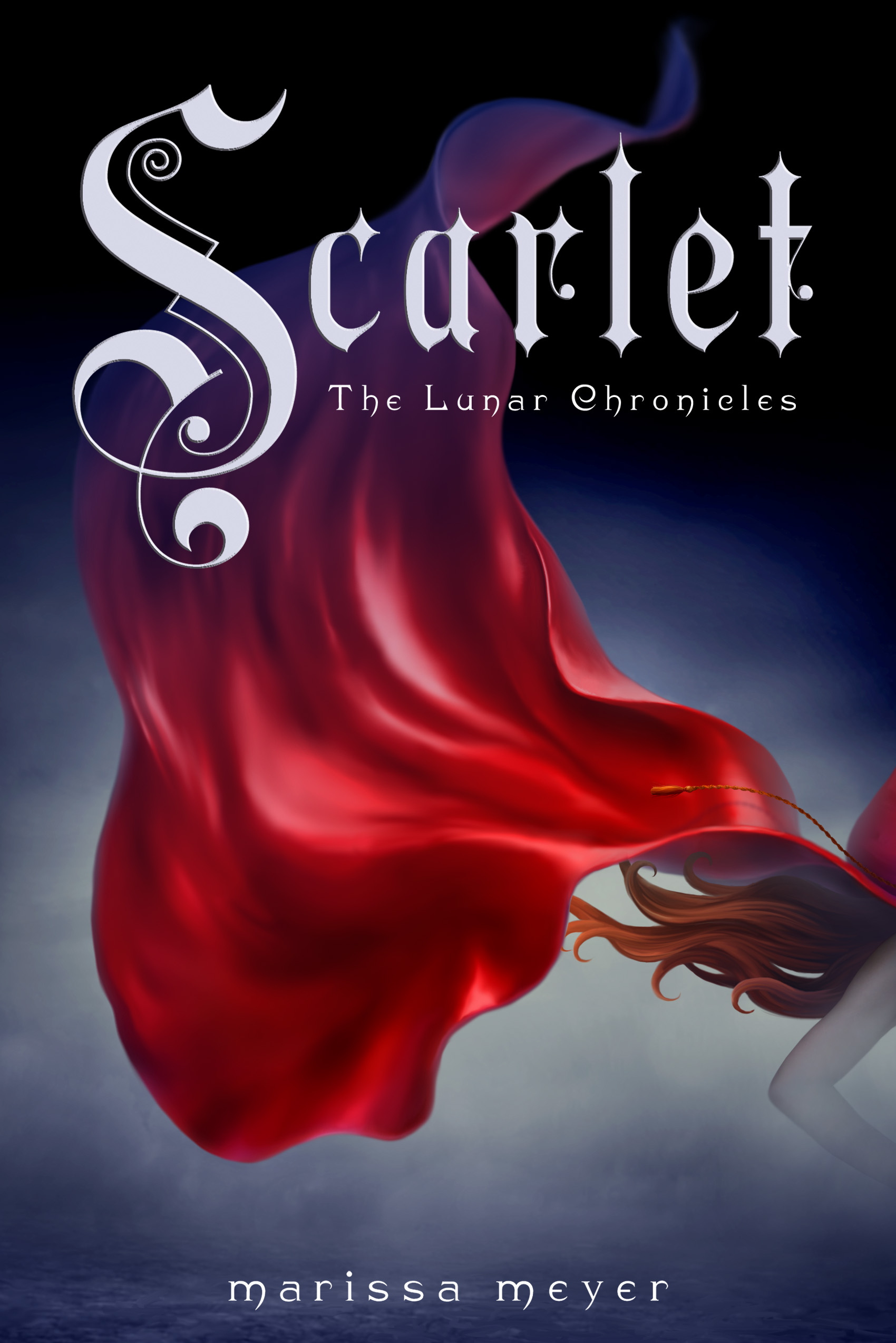
Scarlet by Marissa Meyer

I loved this book!


This is book #2 in the Lunar Chronicles and is the sequel to Cinder. Cinder, as you will recall, was a futuristic sci-fi/fantasy retelling of the fairy tale “Cinderella”. Only this Cinderella was a cyborg with a couple of pretty explosive secrets. In Scarlet, we meet Little Red Riding Hood, her grandmother, and the wolf. 

On the Earth created by Marissa Meyer, Scarlet is a market farmer whose grandmother has disappeared, and Scarlet will do anything to find her. Enter Wolf, a street fighter who Scarlet suspects is involved in her grandmother’s disappearance, but who agrees—rather unwillingly—to help her in her search for the slightly eccentric older lady. Meanwhile, Cinder must break out of prison and stay one step ahead of the evil Lunar Queen Levana who is inexorably pressing on in her quest to marry/imprison/kill King Kai and to reign with terror on Earth.

I think I liked this book even better than I liked Cinder. For one thing, it has Wolf, who I gotta admit I like better than our poor embattled Prince Charming (Kai) from book 1. I also really liked how Cinder’s story and Scarlet’s story intersected. This book was full of action--it didn’t stop running from almost the very beginning—there were very few quiet moments. It delighted me to find little echoes of other stories: the fairy tales, of course, but also Star Wars, Twilight, The Ship Who Sang (Anne McCaffrey)…I actually really enjoy recognizing snippets of other tales when I’m reading a good story. And this was very good story, full of unique elements and completely captivating.

I REALLY liked the book and can’t wait until the next book in this series is released (but I’ll have to, since it won’t be out until Feb 4 of next year!). I believe this YA series will have 4 books in all. Exciting!

Bad Language: Don’t think so
Sex: no sex—a few kisses, though

Cinder by Marissa Meyer


I really, really liked this book!

It is a retelling of "Cinderella" and there is a prince, a stepmother, some step-sisters, a ball, and even a missing, um, foot. Yes, this is where it differs greatly from the fairy tale. Because in Marissa Meyer's world, Cinderella is "Cinder" and she's a cyborg. No one really trusts or accepts cyborgs in post-modern China, now called The Eastern Commonwealth. But the prince, Kai, who lives in New Beijing (well, the whole story takes place in New Beijing), has been told that Cinder is the best robot mechanic in the city, and he seems to like her. But he doesn't know she's a cyborg.

New Beijing is a city in difficulties--there is a mysterious plague that kills people of all ages, the Lunar Queen knows more than she should about state secrets and she is attempting to intimidate Prince Kai into a dangerous state marriage. Cinder, however, is just a cypher in all of this. Or is she?

Here's what my teenage/almost adult daughter has to say about this YA book: "As I am getting older I have begun to notice that many of the fantasy books that are marketed today are very similar to each other. More than once I have started a new critically acclaimed YA book and have stopped after a couple of chapters, because the book's plot is basically the same as every other YA fantasy book. I expected this one to be the same, and I was very glad to be proven wrong. As I sped through the book I felt the familiar grip of an exciting new adventure. I liked it so much that I read the book multiple times throughout the next couple of weeks. This is a fantastic retelling of a beloved fairytale that I would recommend to YA 12 and up."

Yeah, we like the book lots. Can't wait for the rest of the series!

Bad language: nope
Sex: nope


The Inn at Lake Devine by Elinor Lipman


Well, mostly I didn't particularly like this book. Set in the 1960s and 1970s, this book tells the story of Natalie Marx and her relationship with the people of the Inn at Lake Devine. Natalie’s first encounter with the Inn is when her mother receives a letter in response to her inquiry about vacation accommodations: “The Inn at Lake Devine is a family-owned resort, which has been in continuous operation since 1922. Our guests who feel most comfortable here, and return year after year, are Gentiles.” Natalie is stunned by such obvious (and unfair) anti-Semitism and is determined to break into the Gentile ranks at this idyllic Inn. 

This was an interesting approach to telling a story about anti-Semitism. It was not overly serious nor was it heavy handed. It was, in fact, a story about breaking down all sorts of barriers, since not only do the owners of the Inn at Lake Devine prefer to keep their inn Jew-free, but also Natalie’s own family—and others like theirs—wish to keep their families Gentile-free as well. 

It was an engaging book with very likeable main characters. I found it interesting and entertaining to read. However, it was all too common in that the religious characters in the book are not really committed to religion. (Short rant follows:) Why must the truly religious either be relegated to “Christian literature” or be portrayed as unbalanced, deeply flawed or strange? It’s an interesting phenomenon in literature and I’ve yet to read a “mainstream” novel where a religious person has integrity—and lives his/her religion--and is not portrayed as an unhealthy zealot. At least I don’t think I’ve read anything like that yet. Oh wait! The Mitford series has a “normal” religious protagonist. Hmm. Love that series.

Anyway, I was disappointed by Natalie’s lukewarm devotion to her religion. It’s an interesting thing about religious persecution—one only has to be a member of the group to receive the persecution. Natalie’s family was culturally Jewish, but not so much religiously. So one could say that they were subject to the hard parts of the culture—the anti-Semitism (based on their Jewish last name), the restrictions (no Gentile boyfriends or husbands, please)—without receiving any of the spiritual rewards that we hope come with spiritual sincerity. I wonder if perhaps many of us who are members of a religion find ourselves in a similar situation.

Language: Some mild swearing, I think
Sex: Plenty of pre-marital sex, very little description

The Well of Ascension by Brandon Sanderson

I like this picture--you can read the back of the book and therefore read the summary. You know how I dislike summaries.


This is book 2 in the Mistborn series. Book 1 is Mistborn, and book 3 is The Hero of Ages (which I’m reading right now).

So. Vin has killed the Lord Ruler and put Elend on the throne. Now what? That’s pretty much what this book asks. Things were pretty dark when the Lord Ruler was in charge, but since his death things have gotten even harder. With no strong leadership, wars and famine threaten, the city is filthy and chaotic and outside the city conditions are even worse. The heroes of book one (Mistborn) are struggling to find their roles in this new world and more questions are asked than answered in this installment of the series.

Elend Venture, Vin’s love and the country’s new ruler, has just started applying his ideals to leadership when three armies appear at his door. As the siege threatens Elend’s people, there is dissension within his Assembly, a mysterious mistborn follows and flirts with Vin in the night, there is a spy within the ranks of Elend’s most trusted, Sazed investigates a possible solution to the troubles of the whole world, and Vin feels an increasing sense of urgency to find the Well of Ascension. 

This is uphill work, reading these books. I really like Brandon Sanderson, but these books are not happy. Mistborn has a good ending, in that the rebellion succeeds, but this book is just slogging through trouble after trouble all the way through. And I suspect the next book will be too. Whew!

Bad language: Nope
Sex: References to married sex between Elend and Vin, no sex scenes.