I highly recommend this book.
Can you read the blurb on the front cover? It says, "Carpenter has an eye for the magic in what's pedestrian, and in his charge a 'quiet life,' such as Tolkien's, becomes an in-depth act of relish." (Paul West, Washington Post)
This book was a lovely portrayal of John Ronald Reuel Tolkien--a quiet, brilliant man and the creator of a brilliant set of books that started with the creation of a quiet, brave little Hobbit.
Here's the author's note from the front of the book:
"This book is based on the letters, diaries, and other papers of the late Professor J.R.R. Tolkien, and upon the reminiscences of his family and friends.
"Tolkien himself did not entirely approve of biography. Or rather, he disliked its use as a form of literary criticism. 'One of my strongest opinions,' he once wrote, 'is that investigation of an author's biography is an entirely vain and false approach to his works.' Yet he was undoubtedly aware that the remarkable popularity of his fiction made it highly likely that a biography would be written after his death; and indeed he appears to have made some preparation for this himself, for in the last years of his life he annotated a number of old letters and papers with explanatory notes or other comments. He also wrote a few pages of recollections of his childhood. It may thus be hoped that this book would not be entirely foreign to his wishes.
"In writing it I have tried to tell the story of Tolkien's life without attempting any critical judgements of his works of diction. This is partly in deference to his own views, but in any case it seems to me that the first published biography of a writer is not necessarily the best place to make literary judgements, which will after all reflect the character of the critic just as much as that of his subject. I have however tried to delineate some of the literary and other influences that came to bear on Tolkien's imagination, in the hope that this may shed some light on his books."
It was an interesting and well-written book. I learned a lot about J.R.R. Tolkien and also quite a bit about the famous Inklings and C.S. Lewis. I learned a little about England and Oxford too. And I really think I need to read Silmarillion. Soon.
Sex: none
Bad language: none
Tuesday, June 17, 2014
The Abolition of Man by C.S. Lewis
I unreservedly recommend this book.
I really like C.S. Lewis. I love his fiction and I've enjoyed most of what I've read of his non-fiction. Of course, I haven't read even close to all of it. C.S. Lewis' non-fiction is not the kind of stuff I can hurry through, and I tend to wait until I'm in the mood to use my head before I pick up one of his books (or anything else that has teeth). Of course, lots of times I just want to coast and not think about my current book. But I'm not sure that's actually good for me as often as I do it. I've been reading more substantial things lately and not only am I spending more time thinking about meaningful things, but I think I've also been more productive and more in touch with the spiritual things in my life. Hm.
The Abolition of Man is not a narrative with a beginning, middle and end, but it is a series of connected lectures. It is subtitled "Reflections on education with special reference to the teaching of English in the upper forms of schools". I thought about what our government requires our kids to be taught today in school and how Lewis' observations and arguments apply to us now.
Not all of Lewis' logical arguments made complete sense to me. (I'm not nearly as educated, nor so intelligent). I did, however, come out with several ideas of value. C.S. Lewis argues against the debunking of traditional values in the name of intellectualism and on the path to (imagined) human ascendance to the absolute conquest of nature. He logically argues that without traditional values we become creatures ruled by pleasure or by the pleasure of others (i.e. those who are in positions of power or influence over us). He also argues that when we eschew traditional values (he calls that canon the Tao) in the education of our children we make them "easier prey to the propagandist". Lewis assures us that "a hard heart is no infallible protection against a soft head." (p. 14). I'm sure he had Hitler's disastrous (and successful) propaganda in mind when making this argument (but I can see our potential weakness to ANY propaganda--consider today's politically correct agenda and how vulnerable we all are to having our opinions taken over by the opinions continually put forward in the media and at school). I seem to see the effect of this kind of education in the morality of the rising generation. They don't seem to take any stands on moral issues independent of the current populous thought. What they learn in school becomes their reality. They don't seem to think for themselves--they ape current cultural values. What they can't see or touch they won't validate. (Etc etc) Are they "Men Without Chests", subject to the kneading of their educational masters? Hmmm.
Finally, Lewis argues that when we abandon the Tao and replace it with man-made "values" in the name of prevailing against nature, we set the stage for the abolition of our own species. He says:
"The rebellion of new ideologies against the Tao is a rebellion of the branches against the tree: if the rebels could succeed they would find that they had destroyed themselves. The human mind has no more power of inventing a new value than of imagining a new primary color, or, indeed, of creating a new sun and a new sky for it to move in."
Here's a less illustrative (but more substantial) statement of this same idea:
"We have been trying, like Lear, to have it both ways: to lay down our human prerogative and yet at the same time to retain it. It is impossible. Either we are rational spirit obliged forever to obey the absolute values of the Tao, or else we are mere nature to be kneaded and cut into new shapes for the pleasures of masters who must, by hypothesis, have no motive but their own 'natural' impulses. Only the Tao provides a common human law of action which can over-arch rulers and ruled alike. A dogmatic belief in objective value is necessary to the very idea of a rule which is not tyranny or an obedience which is not slavery."
Interesting stuff, with plenty of pithy quotables such as: "The schoolboy . . . will believe two propositions: firstly, that all sentences containing a predicate of value are statements about the emotional statement of the speaker, and secondly, that all such statements are unimportant."
Or this one: "It may even be said that it is by this middle element [magnanimity/sentiment] that man is man: for by his intellect he is mere spirit and by his appetite mere animal."
I like this one; it seems particularly applicable to people today: "Their skepticism about values is on the surface: it is for use on other people's values; about the values current in their own set they are not nearly skeptical enough . . . A great many of those who 'debunk' traditional or (as they would say) 'sentimental' values have in the background values of their own which they believe to be immune from the debunking process."
And lots, lots more. I'll end with his final statement (which I like a lot): "To 'see through' all things is the same as not to see."
Sigh. I like this kind of thing. And, my apologies to anyone who has managed to keep reading to this point, but writing about this book has really helped me clarify my own thoughts about it; it's one of the reasons I love writing. So if you're still reading, thanks! And read the book yourself. Then sit down and write me a long email. I'm interested in what YOU hear in the book. Happy reading!
Sex: nope
Bad language: nope
I really like C.S. Lewis. I love his fiction and I've enjoyed most of what I've read of his non-fiction. Of course, I haven't read even close to all of it. C.S. Lewis' non-fiction is not the kind of stuff I can hurry through, and I tend to wait until I'm in the mood to use my head before I pick up one of his books (or anything else that has teeth). Of course, lots of times I just want to coast and not think about my current book. But I'm not sure that's actually good for me as often as I do it. I've been reading more substantial things lately and not only am I spending more time thinking about meaningful things, but I think I've also been more productive and more in touch with the spiritual things in my life. Hm.
The Abolition of Man is not a narrative with a beginning, middle and end, but it is a series of connected lectures. It is subtitled "Reflections on education with special reference to the teaching of English in the upper forms of schools". I thought about what our government requires our kids to be taught today in school and how Lewis' observations and arguments apply to us now.
Not all of Lewis' logical arguments made complete sense to me. (I'm not nearly as educated, nor so intelligent). I did, however, come out with several ideas of value. C.S. Lewis argues against the debunking of traditional values in the name of intellectualism and on the path to (imagined) human ascendance to the absolute conquest of nature. He logically argues that without traditional values we become creatures ruled by pleasure or by the pleasure of others (i.e. those who are in positions of power or influence over us). He also argues that when we eschew traditional values (he calls that canon the Tao) in the education of our children we make them "easier prey to the propagandist". Lewis assures us that "a hard heart is no infallible protection against a soft head." (p. 14). I'm sure he had Hitler's disastrous (and successful) propaganda in mind when making this argument (but I can see our potential weakness to ANY propaganda--consider today's politically correct agenda and how vulnerable we all are to having our opinions taken over by the opinions continually put forward in the media and at school). I seem to see the effect of this kind of education in the morality of the rising generation. They don't seem to take any stands on moral issues independent of the current populous thought. What they learn in school becomes their reality. They don't seem to think for themselves--they ape current cultural values. What they can't see or touch they won't validate. (Etc etc) Are they "Men Without Chests", subject to the kneading of their educational masters? Hmmm.
Finally, Lewis argues that when we abandon the Tao and replace it with man-made "values" in the name of prevailing against nature, we set the stage for the abolition of our own species. He says:
"The rebellion of new ideologies against the Tao is a rebellion of the branches against the tree: if the rebels could succeed they would find that they had destroyed themselves. The human mind has no more power of inventing a new value than of imagining a new primary color, or, indeed, of creating a new sun and a new sky for it to move in."
Here's a less illustrative (but more substantial) statement of this same idea:
"We have been trying, like Lear, to have it both ways: to lay down our human prerogative and yet at the same time to retain it. It is impossible. Either we are rational spirit obliged forever to obey the absolute values of the Tao, or else we are mere nature to be kneaded and cut into new shapes for the pleasures of masters who must, by hypothesis, have no motive but their own 'natural' impulses. Only the Tao provides a common human law of action which can over-arch rulers and ruled alike. A dogmatic belief in objective value is necessary to the very idea of a rule which is not tyranny or an obedience which is not slavery."
Interesting stuff, with plenty of pithy quotables such as: "The schoolboy . . . will believe two propositions: firstly, that all sentences containing a predicate of value are statements about the emotional statement of the speaker, and secondly, that all such statements are unimportant."
Or this one: "It may even be said that it is by this middle element [magnanimity/sentiment] that man is man: for by his intellect he is mere spirit and by his appetite mere animal."
I like this one; it seems particularly applicable to people today: "Their skepticism about values is on the surface: it is for use on other people's values; about the values current in their own set they are not nearly skeptical enough . . . A great many of those who 'debunk' traditional or (as they would say) 'sentimental' values have in the background values of their own which they believe to be immune from the debunking process."
And lots, lots more. I'll end with his final statement (which I like a lot): "To 'see through' all things is the same as not to see."
Sigh. I like this kind of thing. And, my apologies to anyone who has managed to keep reading to this point, but writing about this book has really helped me clarify my own thoughts about it; it's one of the reasons I love writing. So if you're still reading, thanks! And read the book yourself. Then sit down and write me a long email. I'm interested in what YOU hear in the book. Happy reading!
Sex: nope
Bad language: nope
A Paris Apartment by Michelle Gable
All too often I end up reading books that I don't feel I can recommend on this blog. You know, when you are a reader, you run into the really good ones as well as the really not-so-good ones. And generally I don't post the not-so-good ones at all. But I feel kind of conflicted about that: To me this blog should be about good books that one could recommend to anyone. You've probably noticed that from time to time I do post books that I cannot fully recommend as "good books"--sometimes I overlook the yucky stuff if I really like the book (I know, I know.). But there are quite a number of books that I don't post because I can't recommend them at all as "good books". But! I do think it's useful to post reviews of books that I don't recommend--negative reviews can be just as useful as positive reviews, don't you think? I know that when I look up product (or book) reviews I read a bunch of the positive stuff, but I also make sure to read a lot of the negative reviews too. It helps me get what I hope is a balanced perspective. SO, from now on I'll post books that I've read and wished I hadn't, I'll post books I read and liked but can't wholly recommend, and I'll post books that I started but couldn't finish because they were objectionable to me. And, of course, I'll continue to post the books that are unobjectionable--some better than others, of course, but all "clean".
This book falls in the "books that I've read and wished I hadn't" category.
The premise of this book was a good one: April Vogt, Continental furniture specialist and employee of Sotheby's New York auction house, is summoned to Paris to evaluate an apartment full of valuable furniture and artwork. On her first day in the apartment, April also discovers the journal of the apartment's owner--renowned courtesan Marthe de Florian. She (April) begins to read it to establish provenance for the many valuable pieces in the apartment (especially the life-size painting of our courtesan), but quickly becomes fascinated with Marthe and her story.
Sounds good, doesn't it? But it was really just a series of sad and dirty stories. April's husband cheats on her. She cheats on him (with a guy who is cheating on his girlfriend). Marthe sleeps with everyone and schemes in every way she can think of to get money. It was a book full of amoral people and distasteful choices. No happy endings here. A very "modern" book. I was disappointed. Give it a pass if you prefer your stories uplifting and clean.
Sex: Yup. No titillating scenes, though. This wasn't a romance.
Bad language: yup.
The Good Earth by Pearl S. Buck
I highly recommend this book.
I bought this book ages ago on some clearance table at some book store--you know, a classic that I planned to read "soon". And of course it's been sitting on my "to read" shelf for several years (I like to think that I'm just savoring all those books--anticipating the delight of reading each one of them when I get around to it. My daughter thinks it's more accurate to say that I'm just procrastinating the good stuff in favor of the more lightweight stuff I tend to accumulate on my Kindle. Ha.). But the book club here in my neighborhood chose it for this month's book, so I finally sat down to read it. I'm in the middle of a pile of books right now...can't seem to settle to the one that I'm "in the mood" to read. I'm tired of some of the "fluff" I've been reading lately and so I'm hopping back and forth between some more substantial stuff that requires a bit more concentrated attention. I finally had to just make myself sit down and finish this one so I could participate in our book club discussion.
This is the story of one man, Wang Lung, and his struggles, his beliefs, his family, his strengths and weaknesses. We meet him as he marries and we follow him until his life ends--when he's an old man, the proud father of 3 sons (and 2 daughters too, but they, of course, are nothing to be proud of). The story is set during the reign of the last emperor, right before the revolution that changed China forever.
I really liked the book. I don't think I can write anything that hasn't been written before--it's a Pulitzer Prize winning book, after all, a "great modern classic". So I'm sure my thoughts just scratch the surface. One of the themes that I found most interesting, however, was how Wang's poverty strengthened him, but his wealth weakened his sons. I think a lot about this idea as it applies to kids today. Most parents want their kids to have stuff that they themselves didn't have. They don't want their kids to feel deprived, they want to provide comfort and ease, and our culture is particularly indulgent when it comes to children (we buy them stuff, we take them places, we dress them up, we pay for sports, we pay for lessons, etc....), but is this really good for kids? I'm not sure. I don't think it's particularly good for kids to be always told "we can't afford it"--I think it might make money overly important to them and give pursuit of wealth a disproportionate importance. And I think it's hard for well-off parents to tell their kids "no" when they have no concrete reason to--making it all too easy for kids to end up getting way too much of what they ask for. That is if parents even think these things through BEFORE they have their kids. I know I didn't think a whole lot beyond allowance, making the kids save, encouraging them to get jobs after each one turned 16, etc. Just the basic stuff.
I was visiting yesterday with a friend from Malaysia. She talked a lot about financially helping her brother, her nephews, her mother. In her culture, the parents support the kids until the kids can support the parents. The family members that have money share with the ones that don't, until those family members make good and can contribute as well. Makes it a give-and-take family relationship that lasts a lifetime. That's not how we do it here. Many (most?) American kids take take take for their entire childhood and they aren't really expected to give back. Parents are expected to save, to invest, to have a retirement, to make themselves comfortable and hopefully to leave something to the kids after they die as well. I wonder if that lifestyle turns kids into permanent entitled takers. Of course, sometimes kids do end up having to help their aging parents. But it's not the desired outcome for either parents or kids in our culture. It's a very interesting idea to me. Makes me think that I probably should have/should now encourage my kids to financially help each other. As the elders get financially stable, perhaps they should help the ones still in school? Instead of every man for himself, it should be share and share alike? That's a strong Christian principle, you know. Hm. Don't know if it's a good idea for families or not. Deserves more thought on my part, for sure. Anyway, it was just one of many interesting themes in The Good Earth.
Sex: It's there, of course, and part of the plot revolves around Wang's "lustful" period of life. But it is not titillating; it's simply an accepted part of life.
Bad language: nope
I bought this book ages ago on some clearance table at some book store--you know, a classic that I planned to read "soon". And of course it's been sitting on my "to read" shelf for several years (I like to think that I'm just savoring all those books--anticipating the delight of reading each one of them when I get around to it. My daughter thinks it's more accurate to say that I'm just procrastinating the good stuff in favor of the more lightweight stuff I tend to accumulate on my Kindle. Ha.). But the book club here in my neighborhood chose it for this month's book, so I finally sat down to read it. I'm in the middle of a pile of books right now...can't seem to settle to the one that I'm "in the mood" to read. I'm tired of some of the "fluff" I've been reading lately and so I'm hopping back and forth between some more substantial stuff that requires a bit more concentrated attention. I finally had to just make myself sit down and finish this one so I could participate in our book club discussion.
This is the story of one man, Wang Lung, and his struggles, his beliefs, his family, his strengths and weaknesses. We meet him as he marries and we follow him until his life ends--when he's an old man, the proud father of 3 sons (and 2 daughters too, but they, of course, are nothing to be proud of). The story is set during the reign of the last emperor, right before the revolution that changed China forever.
I really liked the book. I don't think I can write anything that hasn't been written before--it's a Pulitzer Prize winning book, after all, a "great modern classic". So I'm sure my thoughts just scratch the surface. One of the themes that I found most interesting, however, was how Wang's poverty strengthened him, but his wealth weakened his sons. I think a lot about this idea as it applies to kids today. Most parents want their kids to have stuff that they themselves didn't have. They don't want their kids to feel deprived, they want to provide comfort and ease, and our culture is particularly indulgent when it comes to children (we buy them stuff, we take them places, we dress them up, we pay for sports, we pay for lessons, etc....), but is this really good for kids? I'm not sure. I don't think it's particularly good for kids to be always told "we can't afford it"--I think it might make money overly important to them and give pursuit of wealth a disproportionate importance. And I think it's hard for well-off parents to tell their kids "no" when they have no concrete reason to--making it all too easy for kids to end up getting way too much of what they ask for. That is if parents even think these things through BEFORE they have their kids. I know I didn't think a whole lot beyond allowance, making the kids save, encouraging them to get jobs after each one turned 16, etc. Just the basic stuff.
I was visiting yesterday with a friend from Malaysia. She talked a lot about financially helping her brother, her nephews, her mother. In her culture, the parents support the kids until the kids can support the parents. The family members that have money share with the ones that don't, until those family members make good and can contribute as well. Makes it a give-and-take family relationship that lasts a lifetime. That's not how we do it here. Many (most?) American kids take take take for their entire childhood and they aren't really expected to give back. Parents are expected to save, to invest, to have a retirement, to make themselves comfortable and hopefully to leave something to the kids after they die as well. I wonder if that lifestyle turns kids into permanent entitled takers. Of course, sometimes kids do end up having to help their aging parents. But it's not the desired outcome for either parents or kids in our culture. It's a very interesting idea to me. Makes me think that I probably should have/should now encourage my kids to financially help each other. As the elders get financially stable, perhaps they should help the ones still in school? Instead of every man for himself, it should be share and share alike? That's a strong Christian principle, you know. Hm. Don't know if it's a good idea for families or not. Deserves more thought on my part, for sure. Anyway, it was just one of many interesting themes in The Good Earth.
Sex: It's there, of course, and part of the plot revolves around Wang's "lustful" period of life. But it is not titillating; it's simply an accepted part of life.
Bad language: nope
Monday, May 19, 2014
A Wanted Man by Lee Child
Yup, finally I have begun reading the Jack Reacher books. I have a friend who recommended them to me. I saw the Tom Cruise version of Jack on Netflix one time (little man Tom Cruise as very big man Jack Reacher? Really? Hm.). And I even bought this book at Costco and stuck it on my shelf a few months ago. But now my son has started reading the series and I kinda want to see what he's reading. He's all grown up, so it's not like I gotta check these things out for his protection, but I'm curious... And he'll be flattered that I'm reading what he's reading. Ha.
So, I started with "The Affair" (which I cannot recommend because of the gratuitous sex that it contained), but my son assured me that most Jack Reachers don't have that stuff. I think he's read, like, one or two, so he probably can't really assure me anything about "most" of them, but I thought I'd try another. So I picked up this one from my shelf (I had kind of forgotten it was there!). And it was free of all sex scenes. So there you go.
In this book our Jack, who apparently is capable of vanquishing any bad guy, hitches a ride with the wrong group of people. He gets in the car with 2 friendly men and one quiet woman and gets himself into a very complicated situation. Secrets, adventure, danger....and you know what I mean.
I liked the book. And I'll read more (unless they're more like "The Affair" than they are like this one). I like invincible heroes. I like spy stories. I like cops and robbers, especially when the cops win (unless the robbers are more worthy, of course :D). It was a very engaging book.
Bad language: a sprinkling of cursing--no f-words (which for me are the deal breakers)
Sex: none
So, I started with "The Affair" (which I cannot recommend because of the gratuitous sex that it contained), but my son assured me that most Jack Reachers don't have that stuff. I think he's read, like, one or two, so he probably can't really assure me anything about "most" of them, but I thought I'd try another. So I picked up this one from my shelf (I had kind of forgotten it was there!). And it was free of all sex scenes. So there you go.
In this book our Jack, who apparently is capable of vanquishing any bad guy, hitches a ride with the wrong group of people. He gets in the car with 2 friendly men and one quiet woman and gets himself into a very complicated situation. Secrets, adventure, danger....and you know what I mean.
I liked the book. And I'll read more (unless they're more like "The Affair" than they are like this one). I like invincible heroes. I like spy stories. I like cops and robbers, especially when the cops win (unless the robbers are more worthy, of course :D). It was a very engaging book.
Bad language: a sprinkling of cursing--no f-words (which for me are the deal breakers)
Sex: none
It Had To Be You by Susan May Warren
Here's another Christian romance. And, due to my heightened sensitivity to reformed rakes (a la Candice Horn), I can't help but observe that our hero in this story, Jace Jacobsen, is a reformed rake. Yup. There's that element again, and this time in a Christian romance. Of course, in Christian romances, the hero can "find Christ" (and I don't meant to sound cynical here, because I do believe in repentance and God's forgiveness, through the atonement of Christ) and be all cleaned up. As long as he can forgive himself.
Which is our Jace's challenge in this book. He feels trapped by the image that he's inadvertently created for himself. He's a hockey player, a star hockey player--a violent star hockey player. He's an "enforcer", in fact which means (I gathered) that he's a particularly violent hockey player. But his health and his personal peace of mind, his honorable manhood is in danger if he persists in his current lifestyle. Can he really change?
And, by the way, can he hang onto our likeable but self-effacing Eden Christiansen's love? I liked Eden too. She was interesting and had her own misconceptions to overcome.
There are many other characters that have stories to tell in this novel--it's one in a series about the Christiansen family and we get to meet many of their friends along the way. They have their own struggles.
This was an engaging novel with some substantial messages to share. It's clearly a religious book, but not too heavy-handed. It also didn't skate over Christian principles with facile conclusions and catchy sayings. Well, not too many catchy sayings, anyway. Hm. It was not the best, nor the most memorable book I've read, but it was sweet in many ways and I enjoyed reading it.
Bad language: nope
Sex: nope
Which is our Jace's challenge in this book. He feels trapped by the image that he's inadvertently created for himself. He's a hockey player, a star hockey player--a violent star hockey player. He's an "enforcer", in fact which means (I gathered) that he's a particularly violent hockey player. But his health and his personal peace of mind, his honorable manhood is in danger if he persists in his current lifestyle. Can he really change?
And, by the way, can he hang onto our likeable but self-effacing Eden Christiansen's love? I liked Eden too. She was interesting and had her own misconceptions to overcome.
There are many other characters that have stories to tell in this novel--it's one in a series about the Christiansen family and we get to meet many of their friends along the way. They have their own struggles.
This was an engaging novel with some substantial messages to share. It's clearly a religious book, but not too heavy-handed. It also didn't skate over Christian principles with facile conclusions and catchy sayings. Well, not too many catchy sayings, anyway. Hm. It was not the best, nor the most memorable book I've read, but it was sweet in many ways and I enjoyed reading it.
Bad language: nope
Sex: nope
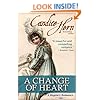
A Change of Heart by Candice Horn
Sorry about the Amazon image over there. I read this as an ebook and so couldn't easily take my own photo of the cover. So.
I think I like Candice Horn. She writes "clean" Regency romances. Here's the library journal summary of this one: "When the unconventional spinster Lady Mary Haviland offers to help the confirmed rake and libertine Jack Raeburn, Marquess of Pemberton, find a wife, she has no idea that she and her money will soon become the object of his pursuit-with surprising results."
Why are rakes and libertines so stereotypically attractive in Regency romances? Why does the coupling of the innocent woman and the experienced man still persist in appearing as the "ideal" in these so-called clean romances? I did NOT like Jack Raeburn. When he's misunderstood and jilted by his true love, he goes on a harlot binge, a bimbo bender. Really, he just goes to bed with as many women as he can get. YUCK. Who wants a guy like that? He's not just used, he's practically used up. Ew. He was a user from top to bottom and yet he was our hero, the match to our damaged and love-starved heroine. Sigh. Not my idea of romance.
It was an engaging book with a thoroughly soiled male protagonist. I guess I can swallow a less tarnished reformed rake from time to time (what Regency hero isn't a reformed rake? I'm going to start noticing this a little more often), but I couldn't fall in love with our Jack. Ick.
Oh, I'll read more Candice Horn. Perhaps I should stay away from the "The Regency Rakes Trilogy", though. I'm not sure this one could really qualify as "clean".
Bad language: nope
Sex: Well, yes. Lots and lots. But absolutely no titillating descriptions, no sex scenes really. We were told about Jack's behavior, not shown it. I felt bad for all the females that Jack burned through. It just felt so ugly.
I think I like Candice Horn. She writes "clean" Regency romances. Here's the library journal summary of this one: "When the unconventional spinster Lady Mary Haviland offers to help the confirmed rake and libertine Jack Raeburn, Marquess of Pemberton, find a wife, she has no idea that she and her money will soon become the object of his pursuit-with surprising results."
Why are rakes and libertines so stereotypically attractive in Regency romances? Why does the coupling of the innocent woman and the experienced man still persist in appearing as the "ideal" in these so-called clean romances? I did NOT like Jack Raeburn. When he's misunderstood and jilted by his true love, he goes on a harlot binge, a bimbo bender. Really, he just goes to bed with as many women as he can get. YUCK. Who wants a guy like that? He's not just used, he's practically used up. Ew. He was a user from top to bottom and yet he was our hero, the match to our damaged and love-starved heroine. Sigh. Not my idea of romance.
It was an engaging book with a thoroughly soiled male protagonist. I guess I can swallow a less tarnished reformed rake from time to time (what Regency hero isn't a reformed rake? I'm going to start noticing this a little more often), but I couldn't fall in love with our Jack. Ick.
Oh, I'll read more Candice Horn. Perhaps I should stay away from the "The Regency Rakes Trilogy", though. I'm not sure this one could really qualify as "clean".
Bad language: nope
Sex: Well, yes. Lots and lots. But absolutely no titillating descriptions, no sex scenes really. We were told about Jack's behavior, not shown it. I felt bad for all the females that Jack burned through. It just felt so ugly.
Subscribe to:
Posts (Atom)