Friday, November 1, 2013

The Phantom Lover by Elizabeth Manfield

So, I'm always looking for clean Regency Romances. What is it about this time period that so captures the imagination of the reader? There are TONS of Regency Romances out there, but very few clean ones. Which makes me laugh in a way because no self-respecting Regency heroine would let herself be ravished as portrayed in so many of these steamy novels. Of course, if we're going to talk about self-respect and its relationship to repeated illicit steamy sexual encounters....but we're not. So.

You know how in the back of a novel you've read--especially older novels--there are sometimes pages advertising other similar authors? That's where I found Elizabeth Mansfield. I ordered one of her books at random from a used book seller on Amazon so see if she was any good.

Of course, I've been very spoiled by Georgette Heyer, who made researching the Regency period a lifelong project. She had sources unique to her (journals and other documents from her own family history) and set the pattern (including dialogue, colloquialisms, clothing styles, etc) for all following Regency romances. No twentieth/twenty-first-century Regency romance author writes as well as she can or can achieve that feeling of "rightness" in the time period. Most fall far short, in fact. But Elizabeth Mansfield was not too bad.

The title implies a paranormal romance, but it's not. The story is of our heroine (who seemed like an overindulged brat at the beginning of the story) and a man who has been wounded in the war and how they come to know each other, change each other and eventually fall in love. Pretty standard romance stuff. Are there ever any "new" stories out there? I'm starting to think not, so it's a pleasure to find an old story entertainingly told, as this one is. I'll certainly read more Elizabeth Mansfield.

Sex: nope
Bad language: nope

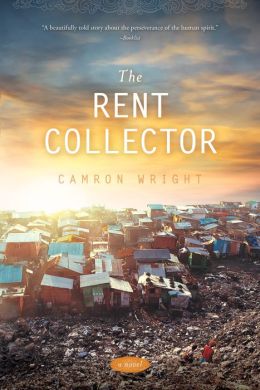
The Rent Collector by Camron Wright

This was an unusual book. It takes place in Stung Meanchey, the largest main municipal dump in Cambodia--where an entire community resides and works to survive. The story is loosely based on the information found in a documentary produced by the author's son. The documentary, titled River of Victory, produced still photos that, as Camron Wright says, "offer the reader fuller flavor and understanding of Stung Meanchey and its residents. The pictures are not an attempt to portray my characters and their particular story as factual." The pictures definitely add to the "fuller flavor" of this book, though; they made it seem more real.

Mr. Wright tells the story of Sang Ly, her husband and young son, their friends at Stung Meanchey and of the drunken, threatening and superior rent collector they derisively call "the Cow". This is a work of fiction even though it's been based on a true situation. Camron Wright says of this book,"Using the documentary as a starting point, I tried to write a novel that accurately reflected the setting, conditions, character traits, and important historical facts. Then, going beyond that, I wanted to imagine what might happen if the gift of literacy were given to a family in those circumstances. The scenario I envisioned plays out in the fictional elements of The Rent Collector."

So I've given you a hint of what this book is about. It was well worth reading. From a cynical viewpoint, it seems clear that his scenario would and could never play out in reality. Still, the glimpse into the life lived in the dump, into Cambodia itself, into the beauty and higher thinking that literacy can provide and the huge portion of hope and happy endings that Mr. Wright wrote into his book make this a novel that is both sweet, engaging, inspiring and interesting. It also made me feel renewed gratitude for my very comfortable life. A good book!

Monday, September 30, 2013

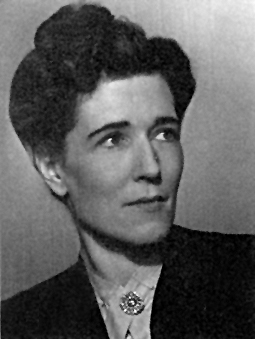
Georgette Heyer's Regency romances

An elegant lady in life, Georgette Heyer wrote a series of elegant, well-researched romances and a series of elegant mysteries. Her Regency romances are what I love best and I have read every one. She's also written some very accurate historical novels (which I don't enjoy nearly as much as her romances).

A list of all her romances:
  • The Black Moth (1921)
  • The Transformation of Philip Jettan (1923) (later republished as Powder and Patch) (1930)
  • These Old Shades (1926)
  • The Masqueraders (1928)
  • Devil's Cub (1932)
  • The Convenient Marriage (1934)
  • Regency Buck (1935)
  • The Talisman Ring (1936)
  • An Infamous Army (1937)
  • The Spanish Bride (1940)
  • The Corinthian (1940)
  • Faro's Daughter (1941)
  • Friday's Child (1944)
  • The Reluctant Widow (1946)
  • The Foundling (1948)
  • Arabella (1949)
  • The Grand Sophy (1950)
  • The Quiet Gentleman (1951)
  • Cotillion (1953)
  • The Toll-Gate (1954)
  • Bath Tangle (1955)
  • Sprig Muslin (1956)
  • April Lady (1957)
  • Sylvester, or the Wicked Uncle (1957)
  •  Venetia (1958)
  • The Unknown Ajax (1959)
  • A Civil Contract (1961)
  • The Nonesuch (1962)
  • False Colours (1963)
  • Frederica (1965)
  • Black Sheep (1966)
  • Cousin Kate (1968)
  • Charity Girl (1970)
  • Lady of Quality (1972)
She is acknowledged as the creator of the Regency-style romance and has written a wide variety of stories. She's been compared to Jane Austen, although Heyer's books, I've noticed, contain a much greater wealth of period details in order to, as I suppose, firmly set her stories in the Regency and Georgian eras for her modern readers. Jane Austen had no need to include so much detail as her stories were written for readers who lived their lives just as her characters did--she wrote for her peers, of course.

There are a few of the books above that I haven't liked very much--A Civil Contract seems unromantic to me and I pity our female main character's (initially) loveless marriage. An Infamous Army and The Spanish Bride are too historically based for my enjoyment--An Infamous Army, especially, about war and loss and suffering is NOT my idea of romance. All three are good books, but since I tend to read Georgette Heyer for escape, I do not feel drawn to the more "realistic" of her books. My favorite of the above books is Venetia, although I also really, really like Lady of Quality, Black Sheep, Frederica, False Colours, The Nonesuch, The Unknown Ajax, Sylvester, April Lady, Sprig Muslin, Bath Tangle, The Toll-Gate (I especially like that one!), Cotillion, Arabella, The Reluctant Widow, Faro's Daughter (I especially like this one too!), The Corinthian, The Talisman Ring (my daughter's favorite), Regency Buck, Devil's Cub, The Masqueraders (such an unbelievable premise, but Georgette Heyer makes it convincing!), and The Black Moth (her first).

I'm posting this list today because I've been "chain reading" Georgette Heyers recently and I do not want to review every single one. I think I have reviewed one or two on this blog--The Black Moth, These Old Shades, Devil's Cub, and The Convenient Marriage, in fact--but I won't review any of her other romances. Suffice it so say that if you like historical romances (and Jane Austen), you will very likely love Georgette Heyer. I purchased my collection online, from Barnes and Noble (some of these stories have been re-released by Harlequin) and in England (where I paid way too much for them, but cannot regret it) in new and used book stores there (I got a first edition of Black Sheep! Happy sigh). If you're looking for escape, you can find it in Georgette Heyer's clever, witty, detailed, romantic and often adventurous tales.

Sex: none (although many of her male characters are the classic reformed rake. Hm.)
Bad language: none

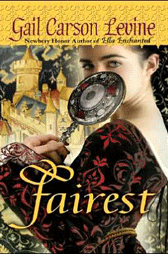
Fairest by Gail Carson Levine

This was another fairy tale retelling, and you know how well I like those. I also generally like Gail Carson Levine.

However. I didn't particularly like this one. Well, I didn't dislike it either. So...

In this re-telling of Snow White, our heroine Aza is a misfit in the kingdom of Ayortha. Despite having great and unusual vocal talents (highly regarded in this kingdom), Aza is large, white and considered very ugly. She's spent her life working at her (loving) family's inn, hiding her face and being reassured and unconditionally loved by her adoptive parents and siblings. One day she has an opportunity to go to court as a lady-in-waiting to a demanding but not unkind duchess. Perhaps Aza will get the chance to sing for the royal family? She does indeed, and finds that her singing talents entangle her in the biggest knot of trouble that she's ever encountered. Will she ever be free again?

The reasons I liked this book: Well, it's a fairy tale. Love those. And I loved the dwarves--who were not really dwarves in this book. And I was so glad that Aza had a loving family. I liked the badness of the bad guy. Why does it often seem that bad guys are more real than the good guys in fairy tales? Is evil so easy to illustrate? Finally, I am always amazed when a familiar story can be so uniquely re-imagined as this one is! So creative!

What I didn't like: Unfortunately, I didn't like Aza much. I liked her best in her most assertive moments, but those were few and far between. I didn't find her love story very believable. WHY did he fall in love with her? Their connection was not built on anything substantial so didn't feel very well developed. The wicked queen usurped her power all too easily. It felt like the conflict needed more teeth. In fact, the whole book needed more teeth. I know this is a YA book, but so many of those do have depth and substance so when I encounter one that has a suitably rich storyline, but doesn't quite develop, I am sorry. Of course, Gail Carson Levine is a master storyteller and so many of her books are so lovely, engaging and entertaining. But this one (loosely connected to Ella Enchanted, by the way) was not one of her best.

Sex: nope!
Bad language: none

Blackmoore by Julianne Donaldson

Well, I officially love Julianne Donaldson. I LOVED Edenbrooke and eagerly awaited Ms. Donaldson's next. This one was quite different and just as enjoyable.

Kate Worthington has always dreamed of being included in an invitation to Blackmoore, the estate that her best friend's brother  (someone she works hard at not loving, by the way) is heir to. But when he finally invites her to Blackmoore, her experience is different from what she had imagined it would be. Charged by her difficult mother with the task of receiving and rejecting 3 marriage proposals before Kate will be allowed to go with her aunt to India (as she has been dreaming of for the last 2 years), Kate will discover at Blackmoore that she cannot play at love without injury to herself and others.

I so dislike writing summaries.

I also dislike books that mire the reader in the protagonist's hopeless situation, which this book seemed to be doing at the beginning. But I soon became totally caught up in Kate's relationship with her family and the Delafield family and waited rather breathlessly for the resolution of Kate's love story (well, actually I didn't wait breathlessly at all for very long because I am a person who reads ahead to the ending just to make sure it's all going to come out well. Because if it doesn't come out well, then why bother reading such an unsatisfying tale? And if it DOES come out well, then I have the pleasure of reading a good ending twice AND enjoying the story, secure in my assurance of a satisfying resolution. People always get all kerfluffled if I happen to mention my predilection for reading the endings first, but I stand firm in my claim that not EVERYONE needs to enjoy books the same way. Hmph.). I do feel just slightest bit, hm... dissatisfied? disappointed? cheated? I don't know just the right word for it, but I do feel just the slightest bit that way when the plot hinges on a highly dysfunctional family as this one does. That's kind of the Disney method, you know--the dysfunctional/incomplete/abusive family creates the conflict that the hero and heroine must resolve. Almost it feels like a lazy conflict. Give me an interesting conflict where the family is intact (many of Georgette Heyer's novels have this) and I'll show you a highly creative and gifted author.

However, I mean to cast no aspersions on this book, nor on Julianne Donaldson, because I have loved both of her books so far and I highly recommend them both!

Sex: none
Bad language: none


A Fine and Dangerous Season by Keith Raffel

I like political thrillers. This one mixes history with fiction and tells the story of how Jack Kennedy's friend Nate Michaels saves the world from WWIII during the Cuban Missile Crisis.

This was less thrill and more political, I think. Nate Michaels, a California businessman and an estranged college friend of President Kennedy, is unexpectedly summoned to the president's assistance with the delicate business between America and Russia. Nate is completely unofficial, yet his friendship with a Russian diplomat could help avert a war.

I really enjoyed this book. For one thing, I could enjoy the journey more since I did know the ultimate ending--the Cuban Missile Crisis was (obviously) resolved and war averted. I also enjoyed the (largely fictional, of course, but still interesting) glimpse into Kennedy's presidency. I really liked our main character, Nate, and I was captured by the little retrospectives into his past that showed how his relationship with Jack was damaged and why he (Nate) felt it could never be mended.

It also prompted me to ask a question that I've asked before: can an unfaithful husband be a good man? If he breaks that important promise--even at the risk of negative public opinion--can he be trusted to keep any other promise? My short answer is NO. John F. Kennedy was never faithful to any woman and his whole character must be compromised by such a deep and constant failure of personal integrity. On the other hand, all of us make mistakes, right? We can be sorry for those mistakes and resolve never to make them again. And hopefully we can be forgiven, right? So are we to be forever condemned by our mistakes? I hope not, although even today a "politically incorrect" mistake can dash a career (a la Paula Deen). Ironically, sexual pecadillos (pick any celebrity) and even criminal convictions (e.g. Martha Stewart) don't seem to be reputation breakers/career enders. But! Sexual dalliance can still founder a political career. And Kennedy's sexual exploits were ongoing--he never redeemed himself from infidelity--he was sexually promiscuous from the onset of his sexual life until his death. Can this persistent infidelity indicate a basic character weakness? I thought about this as I read about this portrait of Kennedy and this particular time in his presidency.

Anyway, it was a good book that I enjoyed.

Sex: Several recountings of Kennedy's sexual adventures in college, some a little bit graphic, although not portrayed in a titillating fashion.This book was not about Kennedy's sex life, but about the relationship between Kennedy and Nate AND about the Washington scene during the Cuban Missile Crisis.
Bad language: a few swear words, not many

Wednesday, September 25, 2013

The Last Queen of England by Steve Robinson

 As you can see from the title, this book is a Jefferson Tate Genealogical Crime Mystery (that's kind of a mouthful!). And I've never read a genealogical mystery before! I liked it! I liked the slightly overweight, but very intelligent Mr. Tate, I liked the genealogical information that he was an expert in, and I was very interested in the outcome of the mystery as well!

Did I like it well enough to read more Jefferson Tate mysteries? Hmm. Maybe.

Sex: Nope
Bad language: A bit. There were some bad guys, you know, and it seems like bad guys must use bad language. Or something.

P.S. I don't have to summarize because you can just read the back of the book down here, right? Zoom in!